

10 Best Drawing Tablets
Find the right tablet for your art style, from beginner pen tablets to pro displays.
 Scott Stein May 3, 2026 6 min read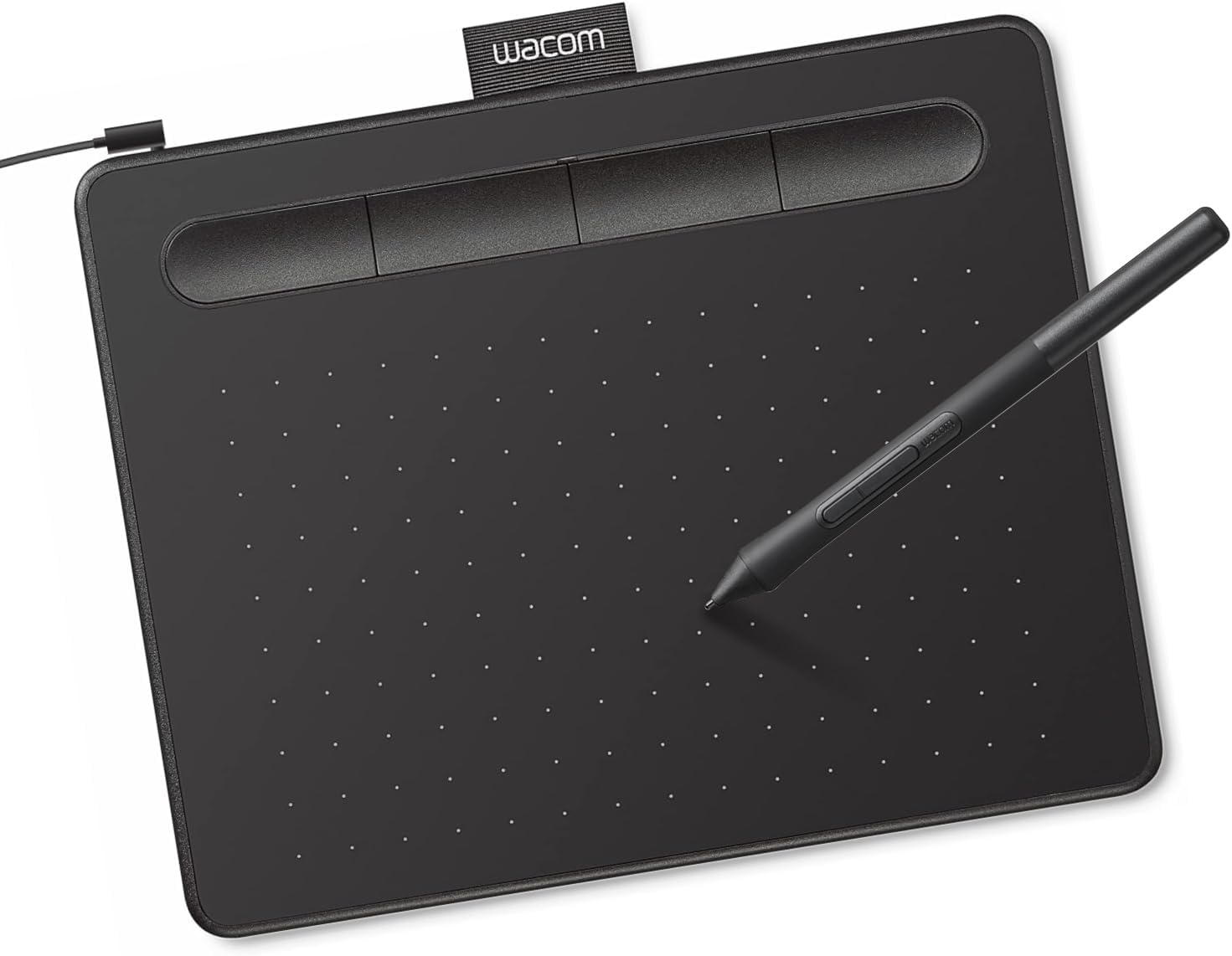
- ✓Battery-free EMR pen technology
- ✓Works with all software programs
- ✓4 customizable ExpressKeys
- ✓Compatible with Chromebook and Android
- ✓Includes software and online training

- ✓Battery-free EMR pen technology
- ✓Works with all software programs
- ✓4 customizable ExpressKeys
- ✓Compatible with Chromebook and Android
- ✓Includes software and online training

- ✓21.5 inch FHD 1920x1080 screen
- ✓120% sRGB color accuracy
- ✓20 shortcut keys and 2 red dials
- ✓8192 pressure levels with 60° tilt
- ✓Full-laminated anti-glare display
- ✓21.5 inch FHD 1920x1080 screen
- ✓120% sRGB color accuracy
- ✓20 shortcut keys and 2 red dials
- ✓8192 pressure levels with 60° tilt
- ✓Full-laminated anti-glare display

- ✓4 pack in assorted colors
- ✓8.5 inch colorful LCD screen
- ✓One-button erase function
- ✓Lock switch to save content
- ✓Pressure-sensitive drawing technology
- ✓4 pack in assorted colors
- ✓8.5 inch colorful LCD screen
- ✓One-button erase function
- ✓Lock switch to save content
- ✓Pressure-sensitive drawing technology

- ✓10x6.25 inch working area
- ✓8192 pressure levels battery-free pen
- ✓60° tilt function support
- ✓12 customizable press keys
- ✓Compatible with Android OS 6.0+
- ✓10x6.25 inch working area
- ✓8192 pressure levels battery-free pen
- ✓60° tilt function support
- ✓12 customizable press keys
- ✓Compatible with Android OS 6.0+

- ✓13.3 inch fully-laminated FHD screen
- ✓123% sRGB color accuracy
- ✓8 shortcut keys and red dial
- ✓60° tilt with 8192 pressure levels
- ✓Includes adjustable stand
- ✓13.3 inch fully-laminated FHD screen
- ✓123% sRGB color accuracy
- ✓8 shortcut keys and red dial
- ✓60° tilt with 8192 pressure levels
- ✓Includes adjustable stand

- ✓10x6 inch working area
- ✓8192 levels battery-free stylus
- ✓10 customizable hot keys
- ✓Creative touch ring control
- ✓Compatible with Windows, Mac, Android
- ✓10x6 inch working area
- ✓8192 levels battery-free stylus
- ✓10 customizable hot keys
- ✓Creative touch ring control
- ✓Compatible with Windows, Mac, Android

- ✓6x4 inch compact design
- ✓8192 pressure levels battery-free pen
- ✓6 customizable press keys
- ✓0.3 inch thickness, highly portable
- ✓Works with Mac, Windows, Android
- ✓6x4 inch compact design
- ✓8192 pressure levels battery-free pen
- ✓6 customizable press keys
- ✓0.3 inch thickness, highly portable
- ✓Works with Mac, Windows, Android

- ✓10x6.25 inch working area
- ✓60° tilt battery-free stylus
- ✓12 press keys plus 16 soft keys
- ✓8192 pressure sensitivity levels
- ✓Compatible with Windows, Mac, Android
- ✓10x6.25 inch working area
- ✓60° tilt battery-free stylus
- ✓12 press keys plus 16 soft keys
- ✓8192 pressure sensitivity levels
- ✓Compatible with Windows, Mac, Android
- ✓10x6 inch active drawing space
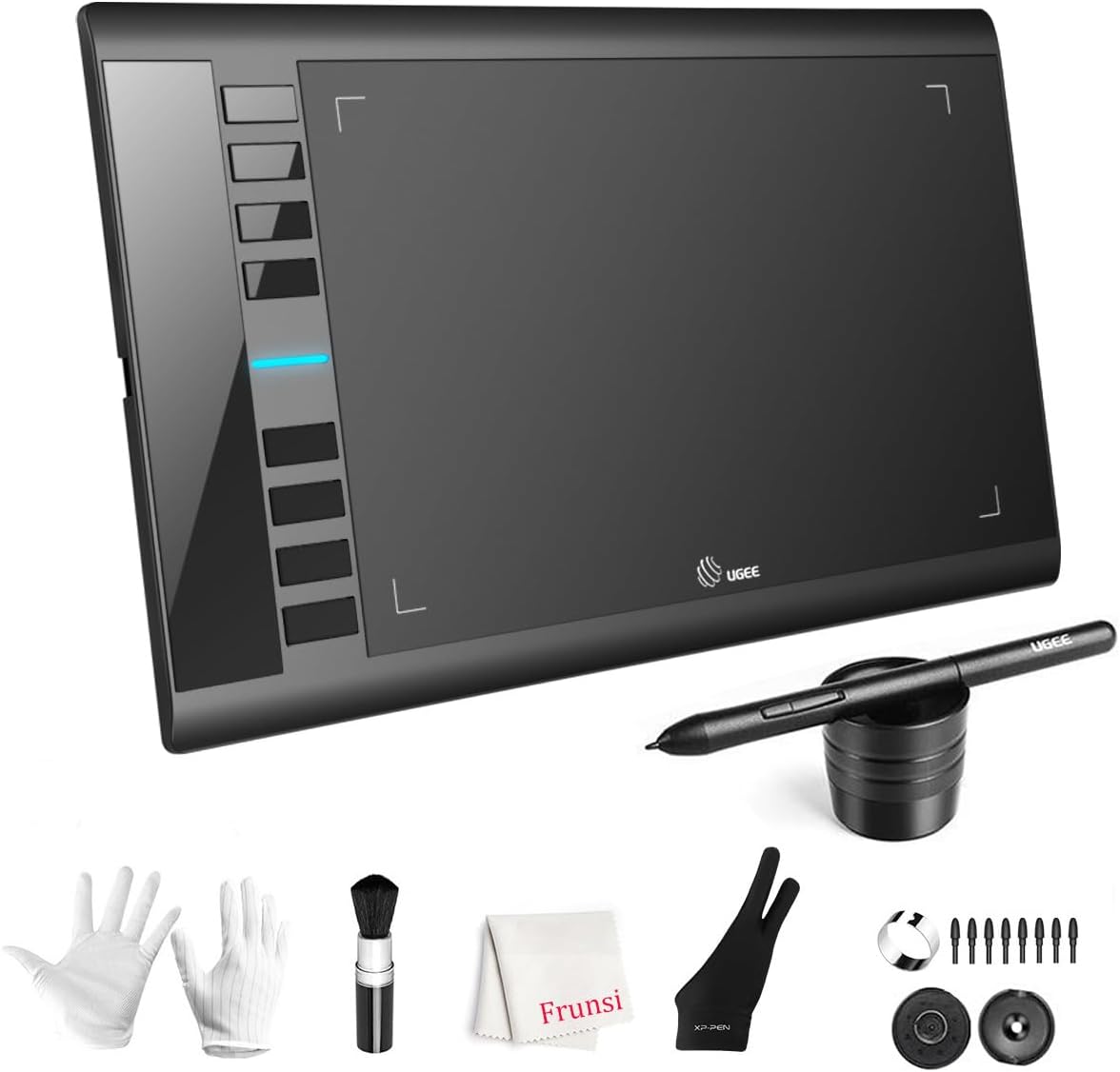
- ✓16384 levels pressure sensitivity
- ✓8 customizable express keys
- ✓Passive stylus technology
- ✓Works with Windows, Mac, Android, Linux
- ✓10x6 inch active drawing space
- ✓16384 levels pressure sensitivity
- ✓8 customizable express keys
- ✓Passive stylus technology
- ✓Works with Windows, Mac, Android, Linux

- ✓6x4 inch compact size
- ✓Battery-free PN01 stylus
- ✓Only 2mm thick, highly portable
- ✓Chromebook supported
- ✓Compatible with OSU! game
- ✓6x4 inch compact size
- ✓Battery-free PN01 stylus
- ✓Only 2mm thick, highly portable
- ✓Chromebook supported
- ✓Compatible with OSU! game
Get the best deals in your inbox
FREEJoin smart shoppers getting weekly deals, top-rated picks & buying guides. No spam, ever.
No spam. Unsubscribe anytime.
You May Also Like
Why Digital Artists Trust Drawing Tablets Over Traditional Tools
If you're serious about digital art, a Drawing Tablet transforms how you create. These devices replace clunky mouse movements with natural pen strokes, giving you precision that mirrors traditional drawing while unlocking digital workflow advantages.
- Pressure sensitivity: Modern tablets detect thousands of pressure levels, letting you control line weight and opacity exactly like brush-on-paper techniques without manual adjustments
- Workspace efficiency: Draw directly in Photoshop, Illustrator, or Procreate with one hand while your other manages shortcuts, eliminating constant tool-switching that breaks creative flow
- Ergonomic comfort: Pen grips reduce wrist strain compared to mice during long sessions, and many tablets tilt to match your natural drawing angle
- Undo without consequence: Experiment boldly knowing every stroke is reversible, accelerating skill development as you test techniques without wasting materials
- Professional portability: Carry your entire studio in a backpack, working anywhere with the same tools used by studio concept artists and freelance illustrators
What Separates a Beginner Drawing Tablet from Pro-Level Hardware
| Factor | Why It Matters | What to Look For |
|---|---|---|
| Pressure Levels | More sensitivity means smoother transitions between thick and thin lines without manual opacity adjustments | Aim for 8,192 levels minimum; budget tablets with 4,096 still work for lineart but struggle with subtle shading |
| Active Drawing Area | Screen real estate affects stroke freedom and whether you're constantly zooming in/out | Small (6x4 inches) suits retouching; medium (10x6 inches) handles most illustration; large (12x8 inches) needed for architectural work |
| Pen Display vs Pen Tablet | Display tablets show your work directly on the drawing surface; standard tablets require looking at your monitor | Displays cost more but eliminate hand-eye coordination adjustment; beginners often adapt to standard tablets within a week |
| Express Keys | Programmable buttons reduce keyboard trips during workflow | Six customizable keys cover most needs; check placement matches your dominant hand without accidental presses |
| Tilt Recognition | Mimics how tilting a pencil creates shading effects | Essential for painterly styles; unnecessary if you primarily do vector work or manga lineart |
Drawing Tablets Worth Shortlisting Right Now
Here are the models that consistently deliver across different use cases and budgets:
| Product | Best For | Check Price |
|---|---|---|
| Wacom Intuos Small | First tablet that grows with your skills | Check Price |
| XPPen Artist 22R Pro | Artists ready for pen display workflow | Check Price |
| TQU 8.5 Inch LCD Writing | Quick sketching and note-taking | Check Price |
| HUION HS610 | Budget-conscious digital painters | Check Price |
| XPPen Artist13.3 Pro | Compact pen display for hybrid workers | Check Price |
| GAOMON M10K | Large workspace without premium cost | Check Price |
The Wacom Intuos Small hits the sweet spot for most people entering digital art. Its driver software works flawlessly across Windows and Mac without the configuration headaches cheaper brands sometimes trigger, and the build quality survives years of daily use.
Getting Consistent Line Quality from Your Drawing Tablet Setup
Driver settings matter more than most newcomers realize. Windows Ink causes double-cursor issues in many art programs, so disable it in your tablet's control panel first thing. Inside your drawing software, turn off mouse acceleration and set your pen pressure curve based on your natural grip strength. Light-handed artists need steeper curves; those who press hard benefit from gentler slopes.
Surface texture directly impacts control. Smooth tablet surfaces let your pen glide fast, ideal for gestural sketching, but offer less friction for precise linework. Textured surfaces or add-on screen protectors create paper-like resistance that many traditional artists prefer, though they wear down pen nibs faster. Buy replacement nibs in bulk regardless of your surface choice since they're consumables like pencil lead.
Map your tablet's active area to match your monitor's aspect ratio, or circles become ovals and proportions feel wrong. The Wacom Intuos Small includes software that auto-detects this during setup, saving beginners from geometry headaches.
Keep your workspace consistent. Switching between keyboard-left and keyboard-right configurations forces your muscle memory to relearn pen positioning. Mount your tablet at the same angle each session, and if you're using a pen display, match its color profile to your reference monitor so you're not correcting colors that look different between screens.